



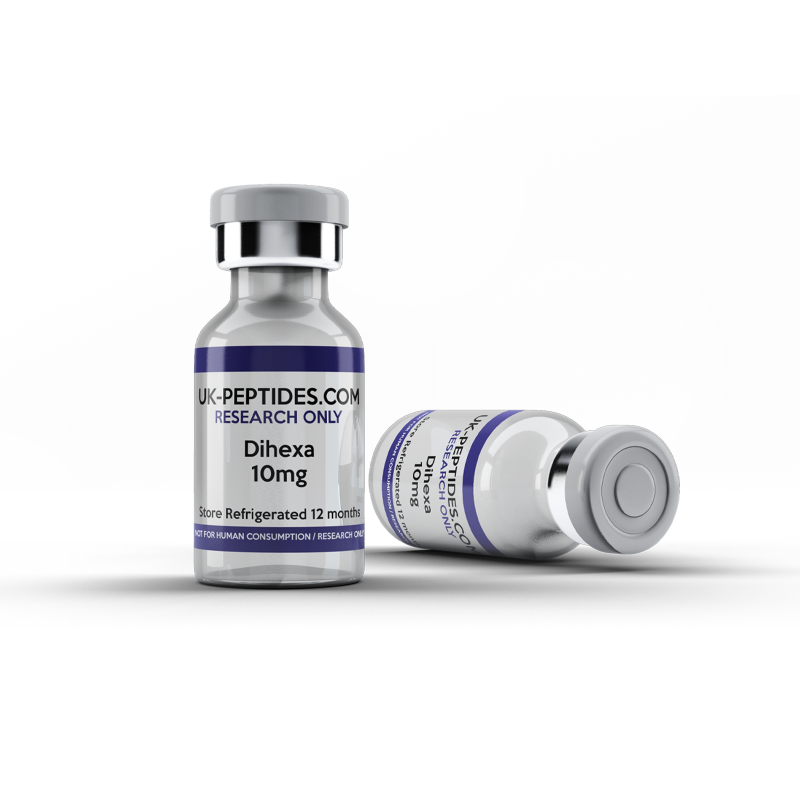
- Stock: 313
- Model: Dihexa
Certificate of analysis

Dihexa, also known as N-hexanoic-Tyr-Ile-(6) aminohexanoic amide, or its developmental code name PNB-0408, is a synthetic oligopeptide derived from angiotensin IV. It binds with high affinity to hepatocyte growth factor (HGF) and interacts with its receptor, c-Met.
The molecular formula of Dihexa is C27H44N4O5, with a molar mass of 504.672 g·mol−1.
Dihexa consists of two hydrophobic amino acids—Tyr-Ile—with the full sequence as follows: Hexanoyl-Tyr-Ile-Ahx-NH2.
Solubility Information
Solubility: Dihexa is hydrophobic and poorly soluble in water; DMSO is the solvent reported in the literature.
Reported solubility data:
- Dihexa dissolves well in DMSO at a concentration of 1mg/ml.
This solubility profile influences the format in which Dihexa is supplied for research. Researchers intending to work with the lyophilised version should ensure access to DMSO or a similar solvent for proper handling.
Storage Guidelines
Store the lyophilised peptide at -20°C. Once reconstituted, use it immediately or store it at 2–8°C for a short duration. Avoid repeated freeze-thaw cycles.
Disclaimer: This product is intended for laboratory research use only. It is not approved for human or veterinary use.
| Identification | |
| Molecular Weight (g/mol) | 504.66 g/mol |
| Peptide Sequence | N-hexanoic-Tyr-Ile-(6)aminohexanoic amide |
| CAS Number | 1401708-83-5 |
| Physical and Chemical Properties | |
| Molecular Formula | C27H44N4O5 |
| Appearance | White to off-white lyophilised powder |
| Melting Point | Not applicable (decomposes before melting) |
| Research Use and Safety | |
| Caution | Handle using appropriate PPE and in compliance with relevant laboratory safety standards. |
| Intended Use | For laboratory research use only. Not for human or veterinary use. |
| Hazard Classification | Not classified as hazardous under GHS for research quantities |
| Storage, Handling and Stability | |
| Storage Temperature, Opened | -20 °C, minimise freeze-thaw cycles |
| Storage Temperature, Unopened | -20 °C recommended for long-term storage |
| Shelf Life | 2 years unopened under recommended conditions |
| Reconstitution Stability | Stable for up to 28 days at 2-8 °C in aqueous solution under sterile conditions |